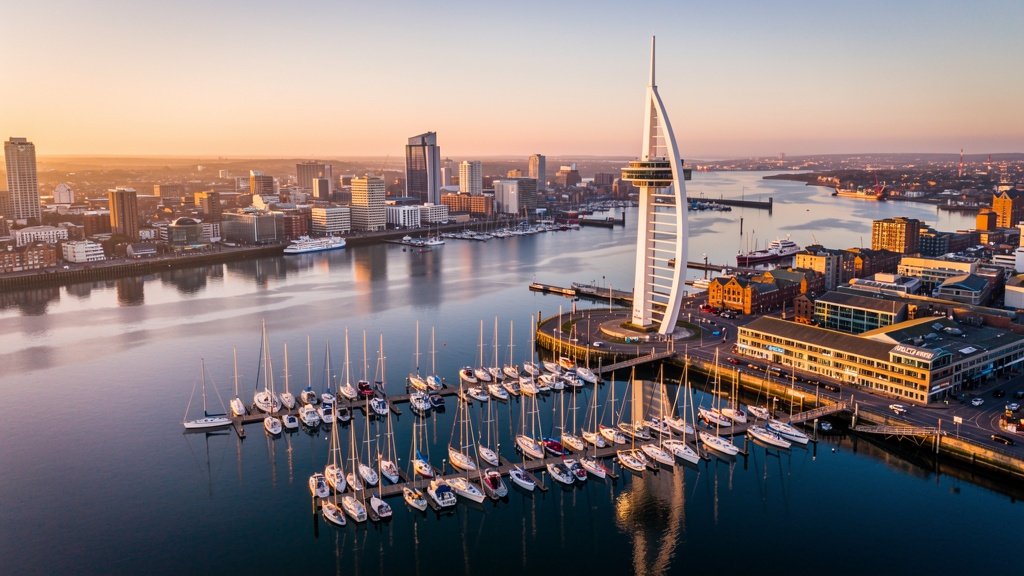
Portsmouth's property market in 2024 is a tale of two forces: persistent demand from young professionals and naval families on one side, and affordability pressure from higher mortgage rates on the other. Understanding what's driving prices — and what survey findings reveal about the city's ageing housing stock — is essential before you commit to a purchase.
Portsmouth Property Prices: The 2024 Snapshot
According to Land Registry data, the average property price in Portsmouth (PO1–PO6 postcodes) at the start of 2024 sits at approximately £265,000 — modest by South-East standards, but up roughly 18% since 2020. Southsea commands a premium, with period terraces in PO4 and PO5 regularly changing hands at £300,000–£450,000. Gosport and Farlington offer better value for buyers priced out of the city centre.
Flat prices have softened slightly since the stamp-duty holiday peak, particularly in high-rise blocks around Gunwharf Quays, where service-charge scrutiny has made lenders more cautious. This is one reason a thorough survey — and where applicable a leasehold review — matters more than ever in 2024.
What Our Surveys Are Finding in 2024
Based on the surveys we completed across Portsmouth and Hampshire in 2023–24, six issues dominate our findings:
- Damp and moisture ingress — identified in 68% of pre-1960 properties, often misattributed to "rising damp" when penetrating damp from failing render or gutters is the real culprit.
- Roof defects — present in 54% of Victorian and Edwardian terraces. Slipped or broken slates, failing lead flashings, and blocked valleys are the most frequent findings.
- Outdated electrics — rubber-insulated wiring and older consumer units were flagged in 44% of pre-1970 homes. Always factor rewiring costs (typically £4,000–£8,000) into your offer.
- Structural movement — visible cracking and past movement was noted in 38% of cases, though most was historic and stable rather than active.
- Coastal erosion damage — properties within 500m of the seafront show accelerated weathering to external render, timber windows, and metal fixings. Budget for more frequent maintenance cycles.
- Subsidence indicators — flagged in 22% of surveys, particularly in properties on clay-heavy ground in Fratton and eastern Portsmouth.
Which Areas Are Hottest for Buyers in 2024?
Southsea (PO4, PO5)
Still the most sought-after neighbourhood, Southsea's Victorian terraces and period conversions attract young professionals and families alike. Competition remains strong, and properties sell quickly — often above asking price. The flipside is that many of these homes are 120–150 years old and need careful survey scrutiny.
Old Portsmouth (PO1)
Georgian and early-Victorian properties close to the harbour command premium prices but carry premium maintenance costs. Solid-wall construction, original sash windows, and historic drainage all require specialist assessment. Our guide to Georgian property surveys covers these challenges in detail.
Fratton & Milton (PO4)
More affordable than Southsea proper, these terraced streets offer good value but sit on heavier clay soils — increasing subsidence risk. Budget for a specialist structural engineer's report if our survey flags any cracking.
Cosham & Drayton (PO6)
Semi-detached 1930s–1950s housing stock in good supply. Cavity-wall construction and concrete-tile roofs are generally more straightforward to assess, making Level 2 HomeBuyer Surveys appropriate for post-1940 examples in good condition.
Gosport (PO12, PO13)
Undervalued relative to Portsmouth, Gosport is attracting buyers priced out of the city. The ferry commute to Portsmouth keeps demand steady. Watch for coastal exposure on properties facing the Solent.
The Mortgage Valuation Is Not a Survey
This bears repeating every year, because buyers still make this mistake. A mortgage valuation is a brief inspection commissioned by your lender to confirm the property is adequate security for the loan. It does not assess condition, identify defects, or protect your interests. It typically takes 20–30 minutes and will not flag the damp, roof issues, or structural movement our surveyors spend 2–4 hours identifying.
In 2024, with average Portsmouth house prices at £265,000, commissioning a Level 2 Survey (from around £350) or Level 3 Building Survey (from around £550) is the most cost-effective insurance you can buy. The average cost of defects identified in our surveys last year was over £14,000 per property.
New Builds and Snagging in Portsmouth
Portsmouth's waterfront regeneration continues, with new-build apartments around the harbour and on former naval land completing regularly. Don't assume new builds are defect-free — our snagging surveys routinely identify 30–60 defects per property, ranging from cosmetic issues to structural omissions. Developers are obligated to rectify snagging defects before or shortly after handover. Read our full new-build snagging guide for what to expect.
Survey Costs in Portsmouth: 2024 Price Guide
| Survey Type | Best For | Typical Cost |
|---|---|---|
| RICS Condition Report | New builds & recently refurbished homes | From £250 |
| Level 2 HomeBuyer Survey | Standard properties in reasonable condition | From £350 |
| Level 3 Building Survey | Period, older or unusual properties | From £550 |
| RICS Property Valuation | Probate, divorce, Help to Buy | From £300 |
Top Tips for Portsmouth Buyers in 2024
- Commission a survey early. Book your surveyor as soon as an offer is accepted — availability is limited during spring and summer.
- Check the flood map. Parts of Fratton and low-lying areas near Langstone Harbour are in Flood Zone 2. Use the Environment Agency flood risk checker before making an offer.
- Investigate leasehold carefully. Many Portsmouth flats are leasehold. Check the remaining lease term (aim for 90+ years), ground rent, and service-charge history before exchanging.
- Use survey findings to negotiate. Our negotiation guide explains how to use defect costs to achieve a fair reduction or ask the seller to remedy issues before completion.
- Factor in running costs. Solid-wall Victorian properties cost significantly more to heat than modern homes. Consider an EPC assessment alongside your survey.
"In over 25 years surveying Portsmouth properties, I've seen buyers lose thousands — and in some cases tens of thousands — by skipping a proper survey. The market is competitive, but a good survey gives you the information to negotiate properly and buy with confidence." — Richard Hawkes, Principal Chartered Surveyor, Portsmouth Surveyors UK
Ready to Buy in Portsmouth? Start With a Survey
Whether you're buying a Victorian terrace in Southsea, a Georgian town house in Old Portsmouth, or a modern flat at Gunwharf Quays, our RICS surveyors know Portsmouth's housing stock inside out. We provide clear, jargon-free reports that help you make the right decision.