Damp is the most common finding in surveys on Portsmouth's older properties. But here's the thing that most buyers — and frankly, most damp-proofing companies — get wrong: not all damp is the same, and the treatment depends entirely on the type.
Portsmouth Surveyors UK carries out surveys across Southsea, Old Portsmouth, Fratton and the wider city every week. Damp features in the vast majority of our reports on Victorian and Edwardian properties. But in my 15 years of surveying in this city, I've seen countless cases of expensive "damp-proofing" treatments that completely failed to address the underlying cause — because the wrong type of damp was diagnosed in the first place.
This guide is designed to help you understand what the different types of damp actually are, how to spot them, what they mean for your Portsmouth property purchase, and what appropriate treatment looks like.
The Three Main Types of Damp in Portsmouth Properties
1. Rising Damp
Rising damp occurs when groundwater travels upward through a wall by capillary action — essentially, the wall "soaks up" moisture from the ground. It's most commonly associated with the failure or absence of a damp-proof course (DPC) — the horizontal barrier built into walls at around 150mm above ground level to prevent this happening.
In Portsmouth's Victorian terraces, original DPCs were typically made of slate, engineering brick or bitumen felt. Many have failed or been bypassed over time — for example, where raised external ground levels have bridged over the DPC, or where modern cement render has been applied below DPC level.
Signs of rising damp:
- A distinctive "tide mark" of salt staining and discolouration at a consistent height (usually 0.5–1m from floor level)
- Peeling or bubbling wallpaper and plaster from skirting board height upwards
- White efflorescence (salt crystals) appearing on wall surfaces
- High moisture readings on a damp meter at low wall levels
What it is NOT: The damp-proofing industry has a long history of misdiagnosing condensation and penetrating damp as rising damp — because the chemical injection treatment is profitable. True rising damp is actually less common than these industries suggest. A competent surveyor will correctly distinguish between the three types using professional instruments and experience.
Appropriate treatment: Addressing DPC failure (chemical injection, new physical DPC, or improving external ground drainage and levels), followed by replastering with appropriate plaster specification.
2. Penetrating Damp
Penetrating damp — also called lateral damp or rainwater penetration — is by far the most common type of damp I find in Portsmouth properties. It occurs when rainwater finds its way through the external fabric of the building and enters the wall structure.
Portsmouth's coastal location and high rainfall make this a particular issue. Salt air accelerates the deterioration of masonry pointing, metalwork and render, creating entry points for moisture more rapidly than in inland locations.
Common causes of penetrating damp in Portsmouth properties:
- Failed or missing pointing to external brickwork (especially on exposed south-westerly elevations)
- Cracked or slipped roof slates allowing rainwater to penetrate the roof void
- Failed leadwork around chimney stacks (the single most common source of internal damp through chimney breasts)
- Defective flat-roof sections, particularly over bay windows and extensions
- Failed window surrounds where original lime mortar has been replaced with shrinking cement
- Blocked or defective gutters overflowing against walls
- Failed external render — common on Southsea seafront properties
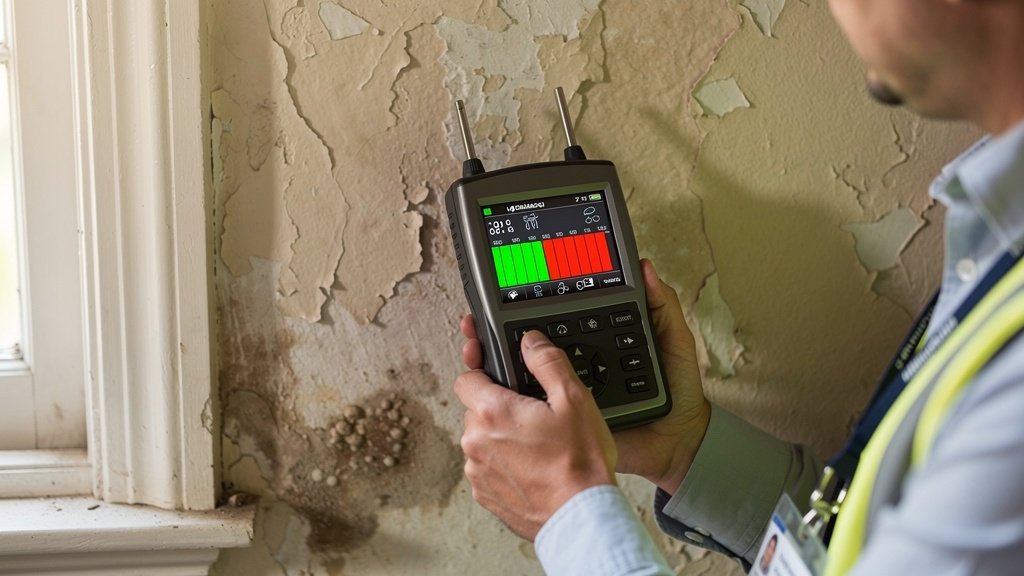
Appropriate treatment: Identify and repair the specific point of entry. No chemical injection needed. No expensive "damp-proofing" systems required. Just fix the roof, repoint the chimney, replace the leadwork, or clear the gutters — whichever is the source. Then allow the wall to dry out and replaster if necessary.
3. Condensation
Condensation is the most misunderstood form of damp. It occurs when warm, moisture-laden air inside a building meets a cold surface — usually an external wall, single-glazed window, or cold bridge in the building fabric — and the moisture condenses from vapour into liquid water.
Condensation is primarily a ventilation and insulation problem, not a structural one. It's extremely common in Portsmouth's older terraces — particularly where inadequate insulation, blocked fireplaces (which provided natural ventilation in Victorian properties) and modern lifestyle habits (drying clothes indoors, cooking without extractor fans) combine to create high internal humidity.
Signs of condensation:
- Black mould growth on walls and ceiling corners, particularly in bathrooms, kitchens and bedroom external walls
- Streaming condensation on windows in cold weather
- Damp feeling to walls but no external source evident
- Mould growth in wardrobe corners against external walls
Appropriate treatment: Improved ventilation (extractor fans in bathrooms and kitchens, trickle vents in windows), improved heating to reduce temperature differentials, and potentially better wall insulation. Again — chemical injection is completely inappropriate and ineffective.
Why Portsmouth Properties Are Particularly Susceptible
Portsmouth faces a specific combination of factors that makes damp more prevalent than in many other UK cities:
- Coastal salt air dramatically accelerates the deterioration of pointing and render, particularly in Southsea and Old Portsmouth within 500m of the sea
- Solid-wall Victorian construction — unlike cavity walls, solid brick walls have no air gap to interrupt moisture travel
- Original breathable construction — lime mortar and original brick were designed to work together. When modern cement pointing or non-breathable paint is applied, the moisture movement pattern changes completely, often causing more damage
- High groundwater table — Portsea Island's low-lying topography means the water table is relatively close to the surface across much of the city
- Neglected maintenance — many of Portsmouth's terraced properties have had decades of inadequate maintenance, with gutters, downpipes, roofs and pointing left to deteriorate
What to Do If Your Survey Flags Damp
If your Portsmouth Surveyors UK report flags damp — or any building survey does — here's what to do:
- Don't panic. Damp is extremely common in older properties. It's almost always fixable.
- Understand the type. Ask your surveyor to explain exactly which type of damp has been identified and the likely source.
- Don't immediately call a damp-proofing company. Many will recommend expensive chemical injection regardless of the actual cause. Get an independent specialist assessment first.
- Get quotes for the appropriate remedial work. This might be as simple as repointing, clearing gutters or replacing leadwork — far less expensive than a full damp-proofing system.
- Use the findings to negotiate. Damp repair costs can be used as legitimate grounds for a price reduction.
"I once surveyed a property in Southsea where the vendor had recently paid £8,000 for a chemical damp-proofing treatment. The damp came back within six months because it was penetrating damp from a failed chimney flashing — which would have cost £400 to fix. The lesson? Always identify the source correctly first." — James Whitmore
How Much Does Damp Repair Cost in Portsmouth?
FAQs About Damp in Portsmouth Properties
Very rarely — unless the damp has caused significant structural damage or dry rot in structural timbers. Most damp in Portsmouth properties is treatable at a reasonable cost. The key is understanding the type and source, getting proper repair quotes, and factoring the cost into your purchase price negotiation.
Not necessarily. If your surveyor has identified the source of damp clearly and provided appropriate repair advice, a specialist report may not be needed. Where further investigation is recommended — usually where the source is unclear or where significant structural damage is suspected — we will specifically state this in the survey report.
Sometimes. Look for staining on walls and ceilings, black mould growth in corners, bubbling wallpaper, salt crystallisation on external brickwork, and any musty smell. But many types of damp aren't visible to the naked eye without professional damp-testing equipment — which is another reason why a survey is essential.
Concerned About Damp in a Portsmouth Property?
Our RICS-accredited surveyors will identify, categorise and report on any damp issues as part of a thorough Level 2 or Level 3 survey. Get a free quote today →