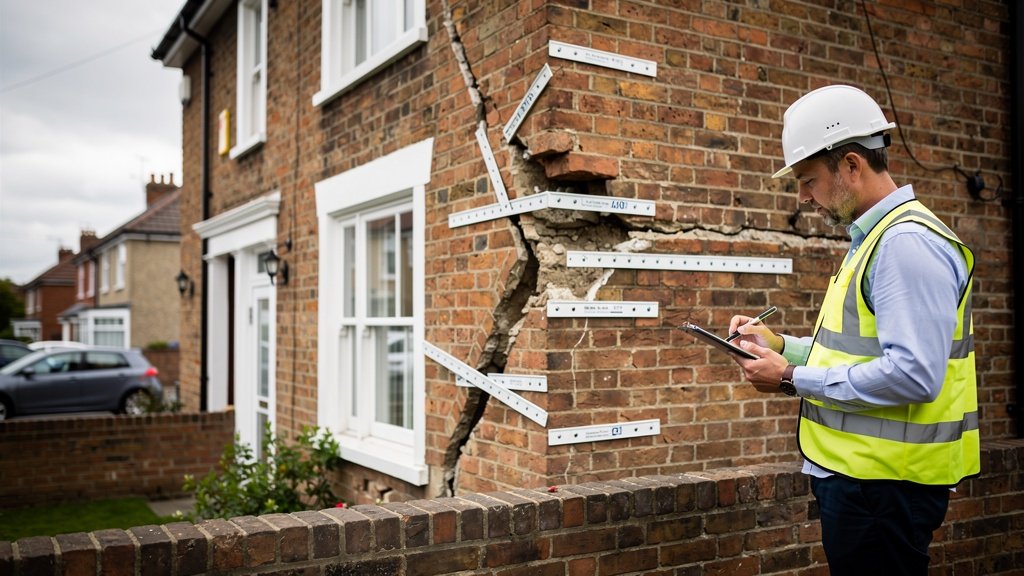
Subsidence is the word that stops property purchases dead in their tracks. If your surveyor flags it — or if you can see diagonal cracks running up a wall — it's natural to panic. But here's the honest truth from someone who has assessed hundreds of Portsmouth properties affected by ground movement: most cases are far less catastrophic than people fear.
Portsmouth Surveyors UK deals with subsidence queries every single week. Portsmouth's geology, its Victorian housing stock, and its coastal environment all combine to create conditions where ground movement is more common than in many other UK cities. Understanding what you're actually dealing with — and getting independent, expert advice — is everything.
This guide will walk you through what subsidence really is, how to identify the warning signs in a Portsmouth property, what causes it locally, and what your options are if your survey flags it as a concern.
What Is Subsidence — and What Isn't?
Subsidence is the downward movement of the ground beneath a building's foundations, causing part of the structure to sink or settle unevenly. The critical word here is unevenly. When a whole building settles gradually and uniformly over time — as virtually every older building does — that's called settlement, and it's completely normal. Subsidence is when one part of the foundations sinks more than another, causing differential movement that stresses the structure.
The distinction matters enormously. Many of the diagonal cracks I see in Portsmouth's Victorian terraces are the result of decades-old settlement that has long since stabilised. Confusing old, stable settlement cracks with active subsidence is one of the most common mistakes buyers — and even some less experienced surveyors — make.
What About Heave?
Heave is the opposite of subsidence — the ground swells upward, pushing the foundation up. It typically affects properties built on shrinkable clay soils and is often caused by the removal of large trees whose roots were previously drawing moisture from the ground. Without the roots, the clay rehydrates and expands. Heave can be just as damaging as subsidence but requires completely different treatment.
Signs of Subsidence in Portsmouth Properties
Knowing what to look for can save you thousands of pounds — either by avoiding a problem property or by preventing you from walking away from a manageable situation that's been misdiagnosed. Here's what Portsmouth Surveyors UK looks for:
Cracks — the Most Misunderstood Sign
Not every crack means subsidence. Here's how to read them:
- Diagonal staircase cracks following the mortar joints of brickwork are the classic subsidence indicator — these are significant and warrant investigation
- Horizontal cracks in mortar joints can indicate wall tie failure or lateral pressure from retained soil — also serious, but a different problem
- Vertical hairline cracks around window and door frames are usually thermal movement or normal shrinkage — very common in new builds and generally not concerning
- Tapered cracks — wider at one end than the other — suggest differential movement and need professional assessment
- Cracks wider than 5mm at any point require investigation regardless of pattern
A key test: if you can see daylight through a crack, or if crack width varies significantly between inspections (suggesting ongoing movement), that's a red flag requiring urgent attention.
Other Warning Signs
- Doors and windows that have recently started sticking or no longer close properly
- Gaps appearing between walls and ceilings or floors
- Floors that slope noticeably (beyond what you'd expect in an older property)
- Cracks appearing simultaneously inside and outside the building at the same location
- A "rippling" appearance to wallpaper where the wall behind has moved
Common Causes of Subsidence in Portsmouth
Portsmouth's specific combination of geology, housing age and urban environment creates a particular set of subsidence risk factors that differ from many other parts of the UK.
Shrinkable Clay Soils
Much of Portsmouth and the surrounding Hampshire area — particularly inland — sits on London Clay and other shrinkable clay formations. These clays are volumetrically unstable: they shrink during dry summers and swell again when moisture returns. Properties with shallow foundations on these soils are particularly vulnerable during prolonged dry spells.
The hot, dry summers of recent years have significantly increased clay-related subsidence claims across Hampshire. Portsmouth Surveyors UK has seen a notable uptick in clay-related cases since 2018.
Tree Root Activity
Tree roots seeking moisture from clay soils are responsible for a significant proportion of subsidence cases in the UK. The problem is worst during dry summers. Species with particularly aggressive, water-seeking root systems — oak, willow, poplar, ash — are the most common culprits. In Portsmouth's Victorian streets, mature trees planted close to terraced houses create an ongoing risk.
It's not just the trees themselves — it's also what happens when they're removed. Removing a large tree without considering the effect on foundation soils can trigger heave as the clay rehydrates.
Leaking Drains
Leaking underground drains are another major cause of subsidence in Portsmouth's older properties. Portsmouth's Victorian sewer and drainage infrastructure is ageing, and even small leaks can wash away fine particles from beneath foundations over time — a process called void formation. This is particularly common in sandy or gravelly soils.
CCTV drain surveys are a worthwhile addition to any building survey on an older Portsmouth property, particularly if subsidence is suspected.
Made Ground and Infilled Land
Portsmouth is built on Portsea Island, and significant areas of the island — particularly around the former harbour margins and parts of Fratton — sit on made ground or historically infilled land. This material can be unstable, compressible or subject to chemical degradation, all of which can cause foundation movement.
Coastal Erosion and Water Table
Portsmouth's coastal location means that tidal and groundwater fluctuations affect some properties. Changes in the local water table — whether through climate change, development or altered drainage patterns — can destabilise previously stable soils.
What Your Surveyor Will Do
When Portsmouth Surveyors UK investigates a suspected subsidence case, we don't just look at cracks in isolation. Our assessment considers the full picture:
- Visual inspection of all cracks — noting pattern, width, length and whether they appear fresh or historic
- Crack monitoring — crack gauges (tell-tales) may be recommended to measure whether movement is ongoing
- Historical context — we research past insurance claims, nearby tree locations and soil type data
- Drain assessment — we may recommend a CCTV drain survey
- Structural engineer referral — for significant cases, we'll recommend you commission a specialist structural engineer's report
The key distinction we make is between historic movement (settled and stable) and active movement (ongoing). Historic movement, properly documented, need not prevent a purchase. Active movement needs investigation before you commit.
Subsidence and Buildings Insurance
Here's something many buyers don't realise until it's too late: buildings insurance can be significantly affected by a subsidence history. If a property has had a subsidence insurance claim, some insurers will decline to cover it, others will charge much higher premiums, and most will apply a significant excess (often £1,000–£2,500) for any future subsidence-related claim.
Before exchanging contracts on any property with a suspected or confirmed subsidence history, you should:
- Ask the vendor for copies of any past subsidence insurance claims and remedial works documentation
- Contact your proposed insurer early to confirm cover is available and at what premium
- Consider specialist insurers if standard cover is refused
- Ensure any structural warranty documentation for previous underpinning work is transferred with the property
Remediation Options
If active subsidence is confirmed, remediation is necessary before the property is mortgageable. The main options are:
Underpinning
Traditional mass concrete underpinning involves excavating beneath the foundations in sections and filling with concrete to create a deeper, more stable foundation. It's effective but disruptive and expensive — typically £10,000–£30,000 depending on the extent of work required.
Modern alternatives include resin injection (less invasive, suitable for certain soil types) and mini-pile underpinning (effective on clay soils). The right solution depends on the cause of the subsidence.
Addressing the Root Cause
Before any structural work, the cause must be addressed. Tree removal or root barrier installation, drain repairs and drainage improvements must happen before underpinning, otherwise the problem will simply recur.
Frequently Asked Questions About Subsidence in Portsmouth
Can I still get a mortgage on a property with subsidence?
Yes, in many cases — particularly if the subsidence is historic, documented as stabilised, and has been properly repaired. Lenders vary significantly in their approach, so it's worth getting mortgage advice early. Portsmouth Surveyors UK can provide a detailed condition report that clearly distinguishes historic from active movement, which helps lenders and insurers make informed decisions.
How much does it cost to fix subsidence?
It depends entirely on the cause and severity. Drain repairs might cost £2,000–£5,000. Traditional underpinning can run from £10,000 to £30,000 or more for a full terrace. However, many cases don't require underpinning at all — just addressing the root cause (tree removal, drain repair) and monitoring. A structural engineer's assessment is essential before any remedial costs are quoted.
Should I walk away from a property with subsidence?
Not necessarily. The key questions are: is the movement historic and stable, or ongoing? Has the cause been addressed? Is remedial work properly documented and warrantied? Has the vendor disclosed any past insurance claims? Many properties with subsidence histories are perfectly sound to buy — at the right price, with proper due diligence. Portsmouth Surveyors UK can help you assess whether the specific property and circumstances make it a sensible purchase.
Will I be able to sell a property that has had subsidence?
Yes, but you have a legal obligation to disclose it. Properties with fully remediated and properly documented subsidence histories are sold regularly. Buyers will typically negotiate a discount to account for ongoing insurance costs and perceived risk. The key is having comprehensive documentation of the cause, the works carried out, any warranties, and evidence of stabilisation.
How quickly does subsidence get worse?
It varies enormously. Clay shrinkage related to drought can cause rapid movement during a dry summer, then stabilise when rainfall returns. Drain-related voids can develop suddenly. In contrast, long-term gradual settlement may take decades. Crack monitoring over a period of weeks or months is the only reliable way to determine whether movement is ongoing or historic — which is why we sometimes recommend deferred exchange pending a monitoring period.
What Portsmouth Surveyors UK Recommends
If you're buying a Portsmouth property and you're worried about cracking or have been told there's a subsidence history, the single most important thing you can do is commission a Level 3 Building Survey. This is the most thorough survey available, and it gives us the scope to properly assess structural movement, document our findings in detail, and give you clear, actionable recommendations.
Don't let subsidence be the thing that either makes you walk away from a perfectly manageable property, or — worse — causes you to buy a problem you didn't fully understand. Get proper, independent advice first.